


How to Brief a Handbag Manufacturer: An RFQ Checklist

Updated: 5 hours ago
Planning a custom handbag programme? Send your drawings or reference images, target market, materials, dimensions, colours, estimated order quantity, testing requirements and delivery window. We will review the construction, flag technical risks and confirm the next development steps.
Autron develops and manufactures handbags and small leather goods for fashion brands. Our MOQ is 200 pieces per colour per style. Standard sampling takes 2 weeks and bulk production takes 60 days. Confirm the start date and delivery schedule against the agreed brief, material availability and approvals. Use this checklist for an OEM brief or when adapting one of our ODM concepts.
Already have a bag concept in mind? Share the style, material, quantity by colour and target delivery date. You can start with the details you have.
1. Show the design and how the bag will be used
Include front, back and side views, overall dimensions and the intended use. Mark the details that matter: strap length and adjustability, closure, lining, pockets, reinforcement and detachable components. If a reference is only for its shape or texture, say so. This helps separate the design you want from details you do not need.
For an original design, share your sketches or tech pack. For an ODM enquiry, identify the Autron concept you want to discuss and the changes you have in mind. Explore Autron's ODM design concepts.
Starting from an Autron ODM design
When you select a concept, include its style code, collection or catalogue edition, and colourway reference. Add the design-page link or a marked screenshot so we can identify the same version. If you prefer a different material, describe that change separately from the reference colourway.
Organise the brief into three parts: keep, change and to confirm. Identify the silhouette or function to retain; mark changes to dimensions, pockets, straps, lining, branding and hardware; and list unresolved materials, testing or packaging. Give the quantity for each style and colour. Confirm the selected materials and final specification before sampling.
Send the selected style code and your change list through Autron's enquiry form.
Still choosing a concept? Follow the library workflow to compare designs, materials and optional straps before completing this checklist: Handbag design and development with the ODM library.
2. Specify the material beyond its name
Material names alone do not define how a finished bag will look or feel. For canvas or denim, indicate the preferred weight, finish and structure. For leather, PU or leather alternatives, describe the grain, thickness, backing, softness and intended appearance. Include a swatch reference when available.
If recycled content or a particular sourcing standard is required, state the documentation needed for the project. Material composition and supporting documents should be checked for the selected article; a broad material category is not enough to establish a claim. Review Autron's material selection.
Planning an apple leather bag?
Choose a reference from the apple material swatches and include its article and colour codes, backing and thickness in your brief. Mark where it will be used: main panels, straps or trims. State whether the bag should drape softly or hold its shape, and show any folded edges or embossed logo. If the material is not selected yet, send the intended use and finish so options can be reviewed before sampling.
For a practical explanation of what apple leather is and how one Autron sample behaved, read the apple section of our material prototype comparison. Use it to frame questions about composition, creasing and logo application; the selected article still needs its own supplier specification and sample approval. Include material availability and supplier minimums in the enquiry rather than assuming every swatch is in stock.
3. Break quantities down by style and colour
List the quantity for each style and each colour, rather than giving only a collection total. Autron's finished-bag MOQ is 200 pieces per color per style. Separate a first order from a possible repeat order. Material mills and component suppliers may have their own purchasing minimums; identify custom colours and hardware in your brief so these requirements can be reviewed separately.
For example, one style in black and tan at 200 pieces per colour is a 400-piece order. A 200-piece total split into 100 black and 100 tan does not meet the per-colour MOQ.
For a smaller launch, tell us which details are fixed and where alternatives are possible. Sharing a material or hardware finish across styles may be worth discussing, but the actual quantities and feasibility need to be checked against the brief.
4. Give a target price and explain what it includes
State the currency, target unit price and requested shipping basis. Identify whether packaging, testing, custom hardware or other requirements need to be included. A quotation is easier to compare when each supplier is pricing the same specification.
If you have a target retail price but no factory-price target yet, share both the retail positioning and the product priorities. Tell us which elements are essential and which can be reviewed if the first costing needs adjustment.
5. Describe branding and special techniques
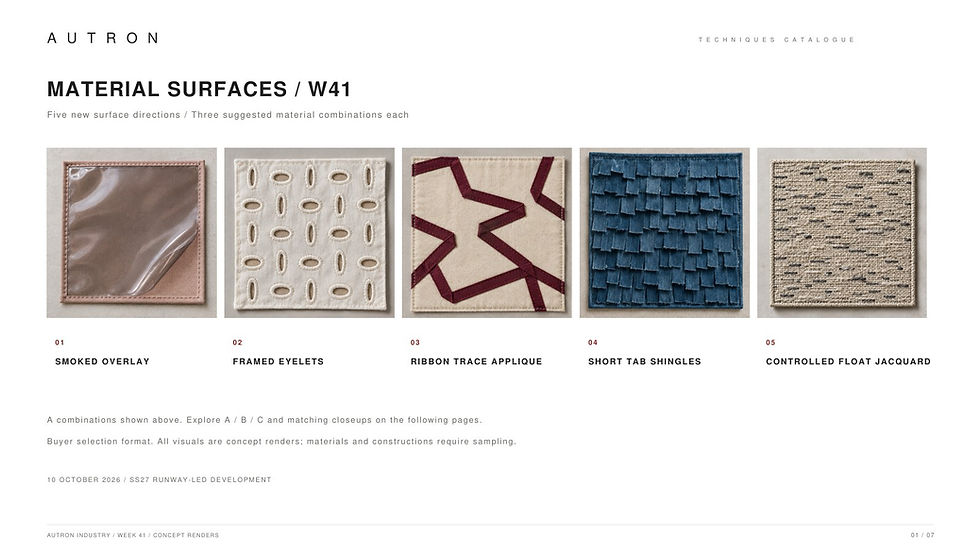
Provide artwork, placement and approximate dimensions for logos, monograms and other branding. For quilting, embroidery, jacquard, braiding or custom hardware, mark the intended scale and location. These details affect development work, construction and costing. Explore Autron's specialist techniques.
6. Separate sample approval from the delivery deadline
Give the date you need to review samples and the date you need the finished goods to arrive. Identify any fixed launch or campaign date. Sampling, material sourcing, revisions, production and transport are separate stages; the schedule should be confirmed for the specific design and order.
Ask what must be approved before production starts, including the sample, colours, hardware, branding and packaging. Record the agreed specification so subsequent changes can be assessed clearly. See Autron's sampling process.
Before bulk production, use the handbag sample approval checklist to record specifications, measurements, materials, function, testing and approved changes.
7. Verify evidence before sampling or ordering
A document supports a claim only when its named legal entity, manufacturing site, scope, validity dates and material match the project. Before approval, check the following:
Quality management: Autron can provide its ISO 9001 certificate for review. Check the named entity, site, certified scope and validity dates.
Match the documentation to the claim: OCS covers organically grown content, while GRS and RCS cover recycled content. Request the applicable scope certificate and project-level traceability or transaction documents. Check the selected material and supply chain rather than assuming a certificate covers every product or shipment.
Social audit follow-up: review the latest SMETA audit together with its corrective action plan and supporting evidence. An audit does not, by itself, confirm that every finding has been closed.
Material and performance evidence: request specifications, composition records and test reports for the exact material, colour, finish and intended use. Evidence for one article or batch should not be assumed to cover another.
Include the destination market, required standards, intended claims and document deadline in the RFQ so each requirement can be checked before sample approval.
A short RFQ checklist to copy
Brand and website:
Product type and intended use:
Destination market and applicable standards:
Design files, dimensions and reference images:
ODM reference: style code, edition, colourway and design link or screenshot:
Customisation: details to keep, changes requested and items still to confirm:
Main material, lining and colour references:
Quantity by style and colour:
Branding, hardware and special techniques:
Target price, currency and shipping basis:
Sample review date and required arrival date:
Testing requirements and acceptance criteria:
Required claims and supporting documents:
Details that are flexible:
Common questions before sending a brief
What is Autron's MOQ for custom handbags?
Our finished-bag MOQ is 200 pieces per colour per style. List each style and colour separately in your brief. Custom materials, colours or hardware may have additional supplier minimums that need review.
How long do handbag sampling and bulk production take?
Autron's standard sampling lead time is 2 weeks and bulk production lead time is 60 days. Confirm when each period starts for your project. Allow separately for sample revisions, buyer approvals and transport; a factory production lead time is not an arrival-date promise.
Can I enquire without a finished tech pack?
Yes. Start with the references, dimensions and requirements you have, and explain what still needs development. The next step is to clarify the missing design and construction details. Read about Autron's design service.
Is an ODM design the same as a ready-to-ship product?
A design concept does not by itself confirm stock availability. Identify the concept and ask about sample availability, customisation and the production requirements for your order.
Can MOQ and lead time be confirmed from a photograph?
A photograph usually leaves material and construction details unresolved. Confirm quantities and timing against the agreed specification, colour breakdown and approval schedule.
Send your handbag project to Autron
Have a project ready? Enter your business details on our enquiry page and paste the checklist into “Is there anything specific you'd like to discuss?”. Include a tech pack if available, or start with reference images and target specifications. Commercial terms, material availability, documentation and timing are confirmed project by project. Send your brief through Autron's enquiry form.


Comments