


How to Develop a Handbag Collection from an ODM Design Library

A handbag design library gives a brand a concrete starting point: a silhouette, colour and material direction, construction details and a reference code. Autron's ODM library brings these together so designers and buyers can compare concepts, identify changes and prepare a development brief before sampling.
Browse the Autron ODM Design Library for bags, small leather goods and charms, or use the steps below to turn a selected concept into a brief.
1. Choose the role of the bag in your collection
Start with what the customer needs to carry and how the bag will be worn. A daily tote, a compact crossbody and an occasion pouch solve different problems. Note the required contents, carrying method, opening and approximate dimensions before choosing a surface or colour.
In the library, filter by category, material or weekly edit, and search by style name or code. Open a concept to review its colour options, proposed dimensions, material description and construction notes. Record the style code and edition so your team can return to the same reference.
2. Compare a complete colourway, not just the main fabric
Switch between A, B and C to compare the body material, trim, cord or strap and hardware together. A palette is a development direction: confirm the actual article, finish and colour against physical swatches before approval.
For example, W43B01 Switchback Cinch Tote proposes soft wing gussets, a curved zip, detachable braided handles and an internal organiser. Its A option combines blue technical check, cobalt trim, orange cord and nickel hardware. The proposed 410 × 260 × 150 mm dimensions still need sample confirmation.

W43B01-A development concept. Image and specifications are a starting point for sampling, not evidence of finished stock or tested performance.
Review the material library to identify alternatives. Record the swatch or article reference, thickness, backing and intended softness. For plant-based alternatives, use our handbag material prototype comparison to frame questions; specifications and suitability must be checked for the selected article.
3. Check construction and optional straps
Read the CAD and construction notes as well as the front view. Check access to the opening, pocket positions, strap adjustment, attachment points and proposed capacity. A design drawing helps explain intent; it does not replace a physical sample, production pattern or performance test.
Where a concept offers Optional Strap, choose the bag colour and strap reference separately. On W43B01, a shoulder strap uses two side anchors, while a pair of handles needs four suitable attachment points. The selected connection and reinforcement must be reviewed before adoption. Do not assume every strap can be fitted to every bag.
For a different functional brief, W43B03 Orbit Bottle Sling combines an oval zipped compartment with a side bottle cradle. Bottle dimensions, retention and loaded balance belong in the sample review. W43B10 Sprint Drawtube uses a soft tube body, gathered ends and a top zip; check usable capacity and access after the gathers are formed.
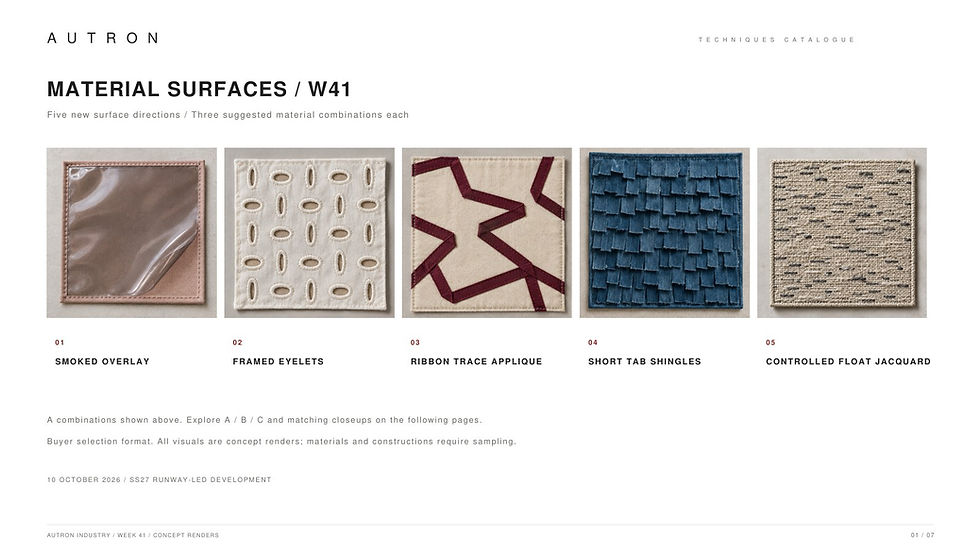
Explore specialist bag techniques when the brief calls for a specific surface treatment. Mark the panel, scale and finish you want to investigate rather than asking for a technique by name alone.
4. Turn your selection into a design brief
Use Selection to keep a shortlist while browsing. In the brief you send, include the full style and colour code, collection edition, reference image or catalogue page, and any optional strap or charm codes. Add your own logo artwork separately.
Separate the request into three parts: keep the details that define the chosen concept; change the elements needed for your brand; and mark what is still to confirm. List dimensions, pockets, strap length, lining, material, hardware and branding changes individually. Autron reviews feasibility and costing against that specification.
An example request might be: “W43B01, Week 43, option A. Keep the curved zip and soft gussets. Please review a different lining and our logo placement. Confirm handle reinforcement, usable opening and the selected fabric before sampling.” This is an example brief, not an approved specification or quotation.
Use the handbag development RFQ checklist for the commercial details, then send your selected design and brief for review.
5. Confirm samples and production separately
Autron's MOQ is 200 pieces per color per style. Standard sampling takes 2 weeks and bulk production takes 60 days. Confirm the start dates against the agreed brief, material availability and approvals; allow separately for revisions and transport. Custom materials or components may have their own supplier minimums.
Agree the sample review criteria before development: appearance and hand feel, measurements, opening, carrying comfort, connections, branding and project-specific tests. Use the handbag sample approval checklist to record the approved specification and remaining changes.
Questions from designers and brand teams
Can I start without a finished tech pack?
Yes. Send the Autron style reference or your sketches, intended use and the details you already know. Mark unresolved questions so the construction and material requirements can be clarified before sampling.
Can I change materials or add my brand logo?
Include the requested material, colour, logo artwork, placement and dimensions in the brief. The selected surface and construction need to be reviewed for the proposed branding process. A visual concept is not confirmation that every change is technically suitable.
Does selecting a design reserve stock or confirm a price?
No. Selection is a way to organise design references. It does not place an order, reserve inventory or provide an instant quotation. Confirm availability, pricing, development scope and any exclusivity requirements with Autron for the specific project.
Where should I begin?
Open the design library, choose a concept and note its style code. If your project starts with your own sketch, see Autron's design service and send the brief with the references you have.


Comments